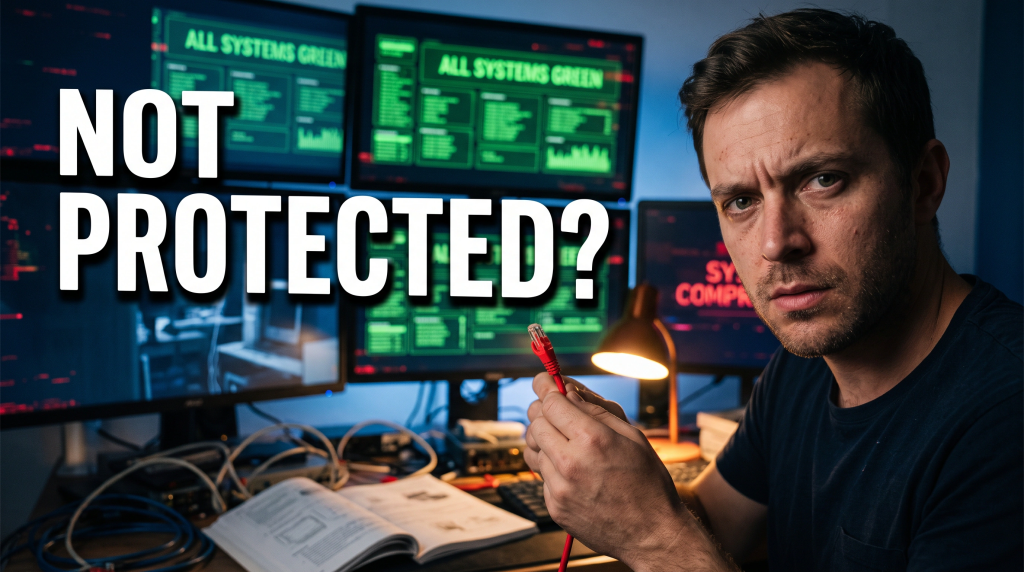
Most businesses today have some combination of antivirus, EDR, MDR, a firewall, email security, cloud security and a service provider watching over the environment. That is a good thing, but there is an uncomfortable question that does not get asked often enough: What happens when those controls are tested against realistic attack activity?
Buying security technology is not the same as validating cybersecurity effectiveness. A dashboard can look healthy. Agents can be installed. Policies can be enabled. Reports can say everything is running normally. None of that automatically proves the organization will detect and respond properly when something malicious happens.
Security products are only part of the system
EDR and MDR platforms deliver powerful capabilities by collecting telemetry, detecting suspicious behaviour, and helping analysts investigate threats. However, the way teams configure and operate these platforms determines the results.
Exclusions can hide important activity. Poorly reporting devices can leave security teams with blind spots. Unintegrated cloud systems can prevent analysts from seeing the full picture. Teams may tune down noisy rules until they miss meaningful alerts. Alerts may reach the platform but never reach the right person. Analysts may spot suspicious activity without having a clear response procedure.
These situations do not necessarily indicate a flaw in the security product. They show that effective security depends on an entire system of technology, people, processes, and configuration. Organizations must test that system regularly. That is why cybersecurity validation matters.
Think about a fire alarm. You would never be satisfied knowing that a fire alarm was installed in the building. Test it. You make sure the alarm sounds and confirm that people hear it. Does the response process work?
Treat EDR the same way.
An authorized penetration test or controlled security-validation exercise can create realistic activity and then compare that against what the organization’s security tools actually detected.
- Did the EDR generate an alert?
- Did the SOC see it?
- Was it classified correctly?
- Did someone investigate?
- How quickly did the response happen?
Those answers are much more valuable than “we have EDR.”
The goal is not to embarrass the provider
This is an important point. Security validation is not a “gotcha” exercise against an internal team, MSP or cybersecurity provider. The goal is to improve the environment. If a test shows that an alert was missed, that creates an opportunity to understand why. Maybe a policy needs tuning. Is telemetry missing? Maybe the escalation process needs to change. Perhaps a tool is not covering the area everyone assumed it was covering. That is useful intelligence.
A mature security program wants to find those issues during a controlled test, not during a ransomware incident.
Connect with us for your cybersecurity
At Cyology Labs, we strongly believe in proof over promises. Cybersecurity tools are valuable. Security providers are valuable. But confidence should come from evidence that the controls are doing what everyone believes they are doing.
The businesses that benefit most are the ones that take the time to get their systems right first. Schedule a performance review on how to defend hiring a hacker at www.CybersecurityMadeEasy.com to assess your AI readiness and strengthen your operational foundation before you start building on top of it.
Your dashboard may be green. The next step is proving that it deserves to be.