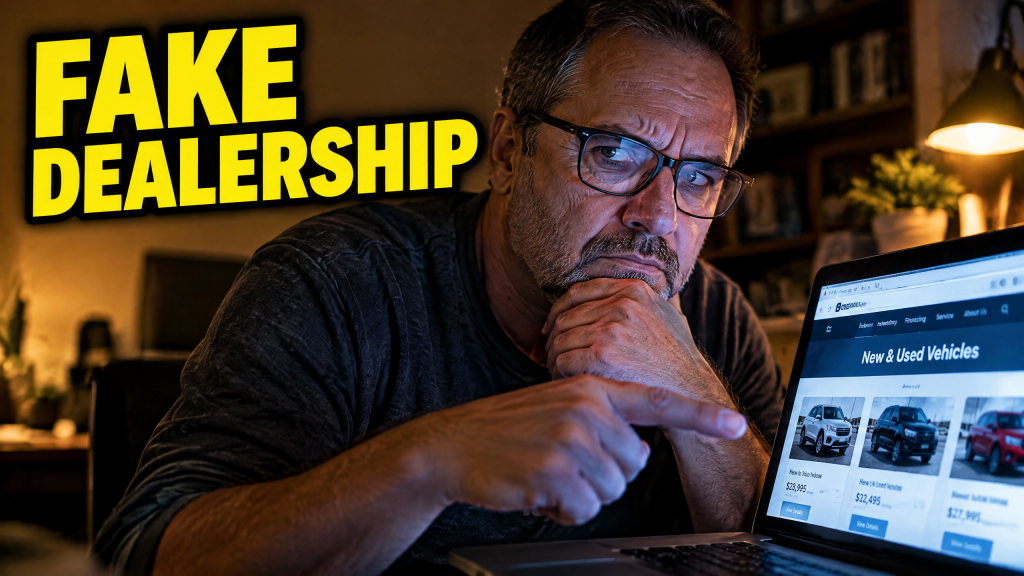
A fake car dealership website scam can make a distant car feel close. You see polished photos, a dealership logo, financing language and a page of happy customers. Then someone answers the phone and walks you through delivery.
Scammers are cloning legitimate websites to sell vehicles that buyers will never receive. The copies may use real logos, listing photos and dealership details. Some add customer testimonials, flexible return policies and careful descriptions of the buying process.
Rare muscle cars and hard-to-find classics make useful bait. A buyer may have searched for months. When the right year, colour and trim suddenly appear, hesitation feels risky. That’s when a request for a deposit or full payment can sound reasonable.
The cruel detail is that the dealership being impersonated may be real. Search its name, and you might find a long history, good reviews and genuine customers. All of that belongs to the real company, not necessarily the website you opened.
Verify the address, not only the reputation
- Look closely at the website address. A changed letter, an added word, or a different domain ending can make a copy convincing
- Don’t rely on the phone number or email printed on that site
- Find the dealership through an independent source
- Call and ask whether it controls the domain and has the vehicle.
Canadian buyers have another check. In Ontario, for example, search the Motor Vehicle Industry Council’s registry to confirm that the dealership and salesperson are registered. Other provinces have their own motor-vehicle sales regulators. Registration doesn’t confirm that the website is genuine, but a mismatch should stop the purchase.
Inspect the car that appears in the ad
- Visit the dealership in person. When distance makes that impossible, hire your own mobile inspection service. Choose the inspector yourself and have that person confirm the vehicle, VIN, condition and location.
- A seller who blocks an independent inspection has answered your question.
- Ask for a live video walkaround, but don’t treat video as final proof. Recorded footage can be reused, edited or taken from another listing. The independent inspection carries more weight because a person you selected is standing beside the vehicle.
Wire-only payment is the exit sign
The FTC says to walk away when a supposed dealership insists on upfront payment by wire transfer only. A wire moves fast and may be difficult to recover. Don’t let a promised discount, another interested buyer or a shipping deadline push you past the inspection.
Before sending money, confirm the business name on the receiving account and get a written purchase agreement. Call the verified dealership number once more to confirm the payment instructions. If the recipient name or account details don’t fit the transaction, stop.
Legitimate dealers can also help. They can monitor for copycat domains, search for duplicate inventory photos, and make their official website and phone number easy to verify. When a shopper calls about a vehicle that isn’t on the lot, the dealer may be seeing the first sign that its identity has been stolen.
A car purchase carries excitement, and that emotion isn’t the problem. The danger starts when urgency replaces inspection. Take one day. Make the calls. Put an independent person beside the car. A fraudster can copy a page in minutes, but can’t produce the vehicle.
Online threats move fast, making a prepared team your best defence. As your security partner, we tailor every assessment to match your unique operational environment.
Stay alert to online fraud and secure your accounts using the latest safety practices. Our mobile app, FRAUDSTER, provides tips and tools to help protect you. Available on Apple and Android, you can learn more at www.FraudsterApp.com. Already have the app? Tap the training icon to sharpen your self-protection skills.